
We wanted to bring attention to the photo essay “Giving birth in the shadow of Haiti’s gang violence,” by Jelle Krings, recently published in The Guardian. Krings explains, “As fighting intensifies in Port-au-Prince, only a fraction of its maternity services remains, and they are under constant threat.” Read excerpts below and visit The Guardian to access the full essay.
[. . .] The hillside neighbourhood in Port-au-Prince has been controlled by gangs since a violent takeover in 2019. Schools have closed, electricity has been cut off and food is scarce. Gunfights can erupt at any time. [. . .]
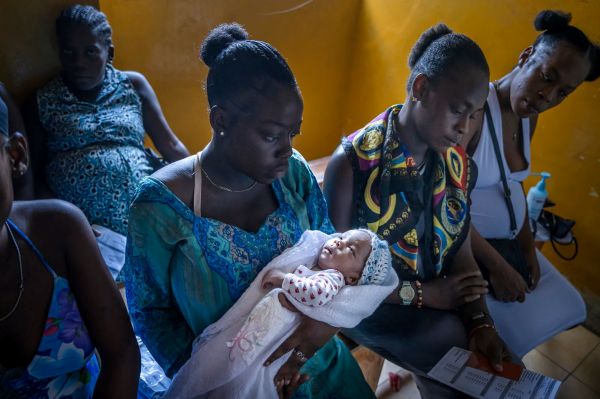
What was a school in safer times in Haiti’s capital has been turned into a temporary pop-up health clinic. The only light comes through the cracks in the boarded-up windows and over the sandbags stacked to stop stray bullets. A room lined with wooden benches is packed with newborns and their mothers and pregnant women seeking maternity services provided by the aid organisation Médecins Sans Frontières (MSF).
According to Human Rights Watch, the Trump administration’s suspension of USAID funding in 2025 deprived about 750,000 women and girls in Haiti of access to healthcare. On the rare occasion it is still available, women line up and wait for hours. [. . .]
After the assassination of president Jovenel Moïse in 2021, Haiti spiralled deeper into chaos. About 1.4 million Haitians have become internally displaced. More than half of the population now faces high levels of food insecurity, and more than 6 million people are in need of urgent humanitarian assistance.
The consequences for maternal health have been grim. According to MSF, between February 2022 and April 2025, the proportion of maternal deaths in hospitals rose from 250 to 350 per 100,000 live births.
Only a fraction of health facilities in Port-au-Prince are still operational and accessible for women living in the poorest neighbourhoods, such as Bel Air and Tabarre. A clinic in Cité Soleil was forced to close in May due to gang violence. An estimated 60% of births take place in the city without medical care – at home, in camps or on the streets. Complications such as haemorrhage, infections and hypertension go untreated, making them the leading causes of maternal mortality. [. . .]
The situation in Port-au-Prince is rapidly deteriorating. [. . .]
For full article and extensive array of photos, see https://www.theguardian.com/global-development/2026/jul/28/giving-birth-haiti-gang-violence-port-au-prince-maternity-services
[Photo above: A month-old baby girl, Luguiona, in the arms of Ruth, a friend of the child’s mother, Adeline, at the Bel Air clinic.]