
Brigitte Viellieu-Davis (American Theatre) interviews performer, director, and educator Isel Rodríguez, who “walks us through the archipelago’s distinct theatre landscape.” For the full text of this enlightening and fascinating interview, visit American Theatre. [This article is part of [American Theatre’s] coverage of TCG’s 2026 National Conference in San Juan, Puerto Rico. For more information and to register for the conference, head here.]
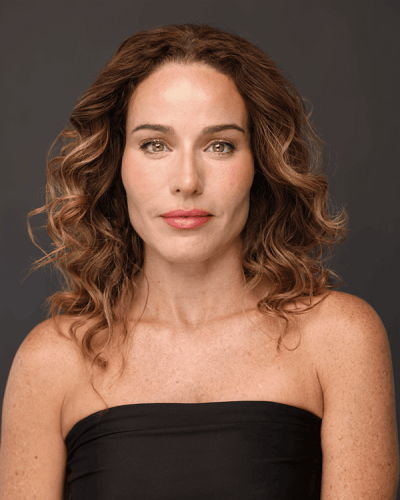
As TCG prepares for its annual conference in Puerto Rico this June, we spoke with Isel Rodríguez, one of Puerto Rico’s most active theatre, film, and television artists, about the institutions, venues, and daily realities shaping the local theatre ecosystem. A performer with Teatro Breve, Puerto Rico’s long-running comedy ensemble and production company, as well as a director and former professor at the University of Puerto Rico, Rodríguez brings the perspective of someone who has made, taught, produced, and sustained theatre across Puerto Rico for over 20 years.
BRIGITTE VIELLIEU-DAVIS: What makes Puerto Rico’s theatre scene distinct from theatre in the United States?
ISEL RODRÍGUEZ: One major difference is labor structure. There are no unions here for theatre artists. There have been attempts to include Puerto Rico in U.S. union structures, and there have also been efforts to create local ones, but those models have not taken hold. The working conditions, pay scales, and production realities here simply do not line up neatly with those in the United States.
That shapes everything. The bridges between institutions and independent artists do exist, but they rely heavily on relationships, initiative, and the artists’ own labor. A typical day for me can mean going to three different rehearsals for three different shows in three different spaces. That gives you a sense of how much the scene runs on trust, flexibility, and people being willing to do many things at once.
Universities and the Instituto de Cultura Puertorriqueña, or ICP, have at different moments helped bring in visiting artists and companies from Latin America and the United States, creating workshops, performances, and exchange. But funding cuts have weakened institutions that once had greater capacity to support artists and sustain that kind of long-term dialogue.
At the same time, one of the beautiful things about the scale of the scene here is that people work with the same collaborators over and over again. It can feel like one big ensemble. Artists move between film during the day and theatre at night, while also teaching or wearing other hats. There is not the same professional audition culture artists might expect in the States. Instead, there is a close-knit field built on continuity, trust, and the kind of shorthand that comes from making work together again and again.
And the audience culture is real. For a city of roughly 2 million people, San Juan (metro area) has a notably strong theatregoing public. A play may only run for one weekend, but that weekend is often sold out. And an ensemble with a following, like Teatro Breve, can keep a production running for six to eight weeks.
If a visiting theatre artist had just one day to begin understanding Puerto Rico’s theatre scene, where should they go first?
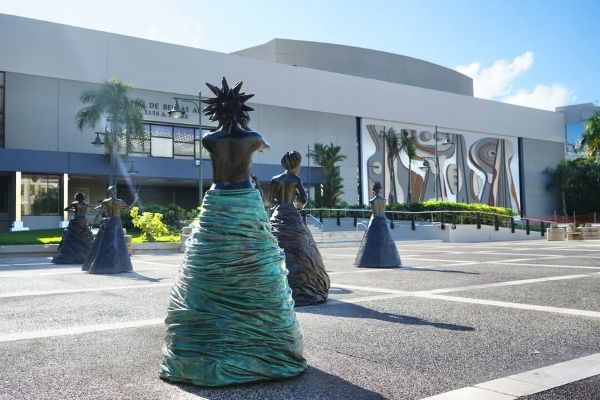
If I had to point a visiting artist toward a few places that reveal the scene most clearly, I would name Teatro Shorty Castro, Centro de Bellas Artes, the ICP, and the Drama Department at the University of Puerto Rico in Río Piedras. Together, they show you a lot about how theatre works here: the self-generated energy of artists, the scale of the commercial scene, the role of public cultural institutions, and the importance of the university.
[. . .] Taken together, these spaces reveal a scene that is both institutionally rooted and artist-driven, shaped by public history, commercial ingenuity, and a great deal of personal initiative. [. . .]
Self-producing is a major reality in Puerto Rico. What does that actually look like?
In Puerto Rico, self-producing usually means the artists are doing almost everything. They are finding the money, securing rehearsal and performance space, paying copyright fees, building audiences, and managing marketing. Social media plays a major role, but so do local television appearances, podcasts, news programs, and word of mouth.
Because the industry is small, recognition matters. A familiar title, a well-known actor, or a proven company can help a production attract an audience more quickly than an unknown group or a new script. Dedicated producers do exist, but many artists still work across multiple roles.
Here, artists do not compartmentalize or specialize in the same way they often do in the United States. The system feels closer to how theatre works in parts of Latin America, where one person may write the play, act in it, help with lights or costumes, manage the space, and still be involved in production. That flexibility can be creatively powerful, but it also reflects the practical reality of survival.
And yet there is an inventiveness to that model too. Puerto Rican theatre artists are often deeply versatile. The boundaries among performer, maker, teacher, producer, and administrator are porous. That can be exhausting, yes, but it also produces artists with range, resilience, and a strong sense of collective responsibility. [. . .]
Brigitte Viellieu-Davis is an educator, writer, and theatre artist based in San Juan, Puerto Rico. She serves as co-ambassador for Puerto Rico with the Dramatists Guild of America, helping build community and visibility for Puerto Rican theatre creators. She is currently a professor of English at Universidad del Sagrado Corazón in San Juan.
For full interview, visit https://www.americantheatre.org/2026/03/25/puerto-rico-a-scene-of-its-own/
[Photo 1 by Javier del Valle: “Musas” art installation welcomes visitors to the Centro de Bellas Artes in San Juan. (Courtesy of Centro de Bellas Artes). Photo 2 by Bianca Torres Suriel: Isel Rodríguez.]